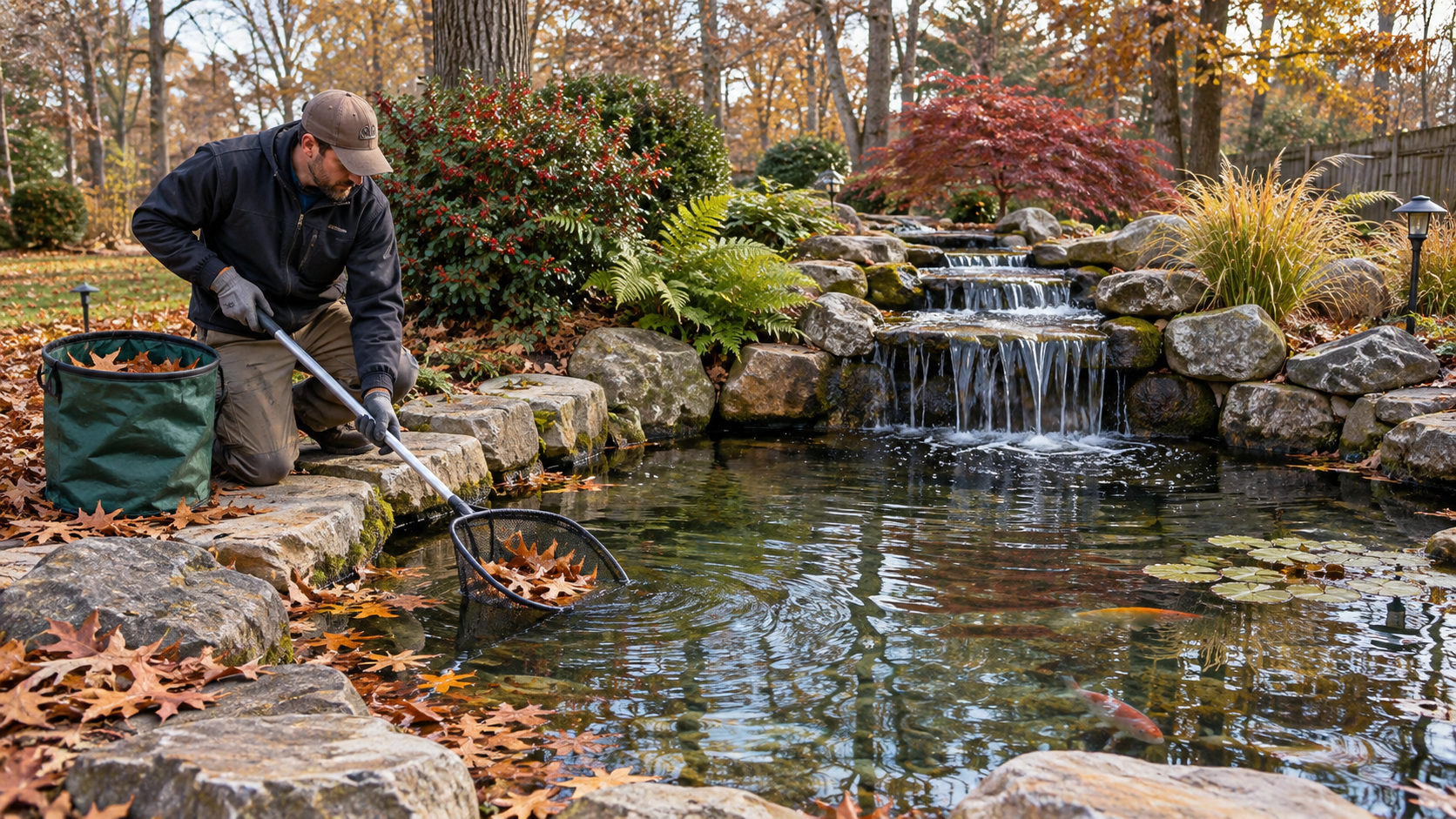
As the temperatures begin to cool in Flora, MS, and the leaves start falling from surrounding trees, your backyard pond or waterfall may need a little extra attention. What looked beautiful throughout spring and summer can gradually become covered with floating leaves, dead vegetation, and other organic debris. If you have koi or other ornamental fish, you might also wonder whether you should continue feeding them or change how your filtration system operates. Fortunately, a little seasonal preparation can help keep your water feature attractive and functioning properly as Central Mississippi moves into the cooler months.
Fall and winter pond maintenance involves removing accumulated debris, checking water quality, managing aquatic vegetation, adjusting fish care routines, and preparing pumps, filters, and waterfalls for seasonal temperature changes. Unlike regions where ponds routinely freeze solid, Central Mississippi generally experiences relatively mild winters with occasional freezing temperatures. As a result, many water features can continue operating through much of the season, although equipment and fish care requirements depend on the pond’s design and conditions.
For homeowners preparing their water features for fall and winter, several maintenance tasks deserve attention:
- Remove fallen leaves before they decompose. Backyard ponds in Flora and Madison can accumulate significant organic debris during autumn, particularly when surrounded by mature trees.
- Consider installing pond leaf netting. Properly positioned netting can help keep leaves and twigs out of ponds near wooded properties in Madison County.
- Adjust koi feeding as water temperatures decrease. Fish metabolism changes with water temperature, making seasonal feeding adjustments important.
- Inspect pumps, filters, and waterfalls. Homeowners in Ridgeland and nearby Central Mississippi communities should check equipment before occasional winter freezes arrive.
- Monitor algae and water quality. Cooler temperatures may slow some algae growth, but organic waste and nutrient buildup can still affect pond conditions.
At Jerry Spencer & Associates, we understand how much homeowners enjoy having a beautiful pond or waterfall as part of their outdoor landscape. Since 2012, we’ve helped property owners throughout Flora and Madison County maintain decorative ponds, koi ponds, and custom water features through professional cleaning, equipment inspections, water quality management, and seasonal maintenance.
Why Is Fall Pond Maintenance Important in Central Mississippi?
Fall pond maintenance is important because leaves, dying aquatic plants, and other organic materials can accumulate as temperatures change. If left in the water, these materials gradually decompose, release nutrients, and contribute to cloudy water, unpleasant odors, and conditions that may affect fish health.
Falling Leaves Can Create Water Quality Problems
Many properties throughout Flora, Madison, and the surrounding countryside feature mature hardwood trees. Although these trees provide attractive shade during warmer months, they can create additional maintenance demands as leaves begin falling.
When leaves collect along the pond bottom, bacteria gradually break down the material. This process consumes oxygen and releases nutrients that may contribute to algae growth.
In heavily stocked koi ponds, excess organic waste can be particularly concerning because fish also depend on adequate dissolved oxygen.
Removing leaves before they sink and decompose is one of the most practical steps homeowners can take during fall.
Preparing for Changing Weather
Central Mississippi winters are generally milder than those in northern states, but freezing temperatures and sudden cold snaps still occur.
According to Mississippi State University Extension, Central Mississippi falls within a region where winter temperatures can occasionally reach levels capable of damaging cold-sensitive landscape plants.
Ponds and waterfalls may also be affected when exposed plumbing or equipment freezes. Seasonal inspections help identify components that could need additional protection before colder weather arrives.
How Do You Remove Leaves and Debris From a Backyard Pond?
Removing leaves and debris from a backyard pond involves skimming floating material, collecting accumulated organic waste, and trimming dying aquatic plants before they break down. The appropriate cleaning methods depend on the pond’s size, depth, fish population, and filtration system.
Cleaning the Water Surface
A pond skimmer or long-handled net can help remove floating leaves before they sink.
During peak leaf fall, homeowners may need to skim the surface more frequently, especially when trees overhang the water feature.
It’s also helpful to inspect skimmer baskets and other accessible debris collection areas. When these components become clogged, water circulation may decrease.
Removing Dead Vegetation
Aquatic plants naturally change as temperatures drop. Some species enter dormancy, while others develop yellowing or dying leaves.
Trimming dead growth can help prevent excess organic matter from accumulating in the water.
However, not every plant should be cut back in the same manner. Plant-specific care recommendations should guide trimming, relocation, or winter protection.
When Is Professional Pond Cleaning Necessary?
A heavily neglected pond may require more than routine surface skimming.
If thick sediment has accumulated, water clarity has declined significantly, or decomposing debris covers the bottom, professional pond cleaning services may be appropriate.
At Jerry Spencer & Associates, we remove organic buildup, inspect filtration components, and address water quality concerns while considering the needs of fish and aquatic plants.
Our goal is to restore attractive pond conditions without unnecessarily disrupting the ecosystem.
Should You Install Pond Leaf Netting During the Fall?
Pond leaf netting can be a useful seasonal addition when nearby trees regularly drop leaves into the water. A properly installed net helps intercept falling debris before it enters the pond, reducing the amount of material that must be removed from the water.
Benefits of Installing a Pond Net
For wooded properties in Flora and Canton, leaf netting can simplify autumn maintenance.
The main benefits include:
- Capturing falling leaves before they sink.
- Reducing organic waste accumulation.
- Making seasonal debris removal easier.
- Helping limit clogged skimmers and filters.
- Supporting cleaner water conditions during fall.
Netting works best when it is installed securely above the water rather than resting directly on the surface.
The mesh should also be appropriate for the pond’s surroundings and designed to avoid trapping wildlife.
When Should Pond Netting Be Removed?
Seasonal nets should be inspected regularly and cleared of accumulated debris before excessive weight causes them to sag.
Once the surrounding trees have finished shedding most of their leaves, homeowners can evaluate whether continued netting is necessary.
Proper installation and removal help protect nearby plants, edging, and decorative rockwork.
How Should Koi Feeding Change During Fall and Winter?
Koi feeding should gradually decrease as pond water temperatures fall because koi are cold-blooded fish whose metabolism slows in cooler water. Feeding too much during this period can leave uneaten food behind and contribute to deteriorating water quality.
Water Temperature Matters More Than the Calendar
In Central Mississippi, November weather can vary considerably from year to year. One week may feel relatively warm, while another brings chilly mornings and rapidly falling temperatures.
That’s why pond owners should monitor actual water temperature rather than adjusting feeding based solely on the date.
As temperatures cool, koi generally require less food. Depending on the water temperature and the fish’s condition, a suitable easily digestible seasonal diet may be recommended.
When water temperatures become sufficiently cold, feeding should be stopped according to established koi care guidance.
Avoid Overfeeding During Cooler Weather
Uneaten fish food contributes nutrients and organic waste to the pond.
If your koi aren’t actively eating, continuing to add food can create unnecessary water quality problems.
For homeowners maintaining koi ponds in Madison, Ridgeland, and nearby communities, monitoring fish behavior and water temperature helps guide appropriate seasonal feeding decisions.
Professional koi pond maintenance can also include checking water quality and evaluating whether filtration and circulation remain suitable for the fish population.
Can Algae Still Grow in Ponds During Winter?
Algae can continue growing during Central Mississippi’s cooler months, particularly when sunlight and available nutrients support its growth. Although some forms of algae become less active as temperatures decrease, winter doesn’t automatically eliminate algae-related problems.
Why Organic Buildup Contributes to Algae Growth
Decaying leaves, fish waste, excess food, and dying vegetation can release nutrients into pond water.
When these nutrients accumulate, algae may grow even if the water feels cooler than it did during summer.
Removing debris and avoiding overfeeding can help reduce nutrient availability.
Understanding UV Clarifier Systems
UV clarifiers are designed to expose passing water to ultraviolet light, helping control certain types of free-floating algae.
These systems can improve water clarity when appropriately sized, installed, and maintained.
However, UV clarifiers don’t remove settled debris, eliminate every form of algae, or correct underlying nutrient problems.
For homeowners dealing with persistent green water, professional pond algae control may involve evaluating filtration, circulation, fish feeding, sunlight exposure, and water quality.
At Jerry Spencer & Associates, we help homeowners assess filtration performance and determine whether equipment maintenance or upgrades are appropriate.
Should You Keep Your Pond Pump and Waterfall Running During Winter?
Many ponds and waterfalls in Central Mississippi can continue operating during portions of winter, but the right approach depends on equipment design, fish needs, and exposure to freezing temperatures. Pumps, filters, pipes, and decorative waterfalls should be inspected before cold weather to determine whether continued operation or seasonal shutdown is appropriate.
Inspecting Pond Pumps and Filters
Before temperatures drop, homeowners should inspect equipment for unusual noises, reduced flow, leaks, and debris accumulation.
A clogged filter may restrict circulation, while worn pump components can become less reliable.
Professional pond maintenance can include inspecting pumps, cleaning filtration components, and addressing developing equipment problems.
Preparing Waterfalls for Freezing Weather
Decorative waterfalls may remain operational during mild winter conditions. However, freezing temperatures can cause ice accumulation around spillways, tubing, and exposed plumbing.
If ice changes the water’s normal flow path, water may escape outside the pond or reservoir.
For certain systems, winterizing or temporarily shutting down the waterfall may be the safer approach.
A qualified pond professional can evaluate exposed plumbing, equipment placement, water depth, and circulation needs before recommending a seasonal operating plan.
Protecting Fish During Equipment Changes
Koi ponds require particular consideration when adjusting water circulation.
Abruptly shutting down essential aeration or filtration without understanding the system can affect water quality and fish health.
Before changing equipment operation, homeowners should consider pond depth, fish population, oxygen requirements, and the manufacturer’s instructions.
What Warning Signs Indicate Your Pond Needs Professional Maintenance?
Warning signs that a pond needs professional maintenance include persistent cloudy water, excessive debris, unusual equipment noises, declining water levels, and changes in fish behavior. These symptoms may indicate developing problems with water quality, circulation, filtration, or the physical condition of the water feature.
Homeowners should watch for:
- Thick layers of leaves or decaying vegetation.
- Unusual odors coming from pond water.
- Persistent green or cloudy water.
- Reduced waterfall flow or weak circulation.
- Pumps making grinding, rattling, or unusual humming noises.
- Water levels dropping without an obvious explanation.
- Fish gasping near the surface or behaving unusually.
- Visible leaks around waterfall edges or plumbing connections.
For pond owners in Flora and surrounding Madison County communities, addressing these conditions before a cold snap can help prevent additional complications.
If fish appear distressed, prompt water quality testing and appropriate professional assistance are particularly important.
Common Local Scenario: Preparing a Flora Koi Pond for Winter
A common situation involves a homeowner in Flora with a koi pond surrounded by mature shade trees. Throughout summer, the pond looks beautiful, and the waterfall provides a relaxing feature near the patio.
As autumn arrives, leaves begin collecting in the skimmer and settling along the bottom.
The homeowner also notices that the koi are eating less frequently as water temperatures decrease.
A seasonal maintenance visit could include removing debris, trimming dying aquatic vegetation, inspecting the filtration system, and evaluating the waterfall’s readiness for occasional freezing weather.
Pond netting might also help reduce the amount of falling leaves entering the water.
This approach allows the homeowner to address several seasonal concerns together rather than waiting until equipment problems or poor water clarity develop.
Frequently Asked Questions About Fall and Winter Pond Care in Flora, MS
When should I begin fall pond maintenance in Central Mississippi?
Fall pond maintenance should begin as leaves start dropping and pond water temperatures begin decreasing. In Flora and nearby Madison County communities, this often means paying closer attention during October and November. However, actual timing depends on weather patterns and the trees surrounding the pond.
Should I completely drain my backyard pond before winter?
Most established backyard ponds and koi ponds shouldn’t be completely drained simply because winter is approaching. Draining can disrupt beneficial bacteria and stress aquatic life. However, certain decorative water features may require seasonal shutdown or partial draining according to their equipment and construction requirements.
How often should I clean leaves out of my pond in Flora?
Leaves should be removed regularly during peak fall accumulation, sometimes several times a week when trees are shedding heavily. The appropriate frequency depends on nearby vegetation, pond size, and whether netting or skimmers are installed. Preventing leaves from sinking is generally easier than removing decomposed material later.
Can koi survive winter outdoors in Mississippi?
Koi can often remain outdoors through Central Mississippi winters when the pond has suitable depth, water quality, oxygenation, and protection from extreme conditions. However, shallow ponds and exposed equipment may require additional precautions. Feeding and circulation should be managed according to water temperature and the pond’s specific conditions.
Should I turn off my waterfall during freezing weather?
Some waterfalls should be temporarily shut down or winterized when freezing temperatures threaten exposed plumbing or interfere with water circulation. Other properly designed systems may continue operating under suitable conditions. A professional inspection can help determine the safest approach for your equipment.
Does pond leaf netting help prevent algae growth?
Pond leaf netting can indirectly support algae management by reducing the amount of decaying organic material entering the water. However, netting doesn’t directly remove algae or eliminate nutrients already present. Effective algae control may also require water quality management, filtration, and appropriate fish feeding practices.
Can a UV clarifier keep my koi pond clear during winter?
A properly functioning UV clarifier may help reduce certain free-floating algae that cause green water. However, it won’t remove sediment, decaying leaves, or every type of algae. Its effectiveness depends on appropriate sizing, flow rates, equipment condition, and the pond’s overall water quality.
Does Jerry Spencer & Associates provide winter pond maintenance in Flora?
Yes, we provide seasonal pond maintenance in Flora and throughout Madison County. Our services include pond cleaning, water quality checks, pump and filter inspections, algae management, and equipment repairs. We tailor maintenance recommendations to the pond’s design, surrounding landscape, and aquatic life.
Keep Your Pond Beautiful Through Every Season in Central Mississippi
Your pond or waterfall should remain an enjoyable part of your landscape even when the weather begins to cool. Whether you’re watching leaves drift across the water, preparing your koi for changing temperatures, or making sure your waterfall equipment is ready for occasional winter freezes, seasonal maintenance helps protect the beauty and function of your water feature. For homeowners throughout Flora, Madison, Canton, Ridgeland, Clinton, and surrounding Central Mississippi communities, a little preparation during fall can make pond care more manageable throughout winter and into spring.
At Jerry Spencer & Associates, we’ve been helping local property owners maintain beautiful outdoor water features since 2012. We understand the unique maintenance challenges that come with Mississippi’s changing seasons, and we’re committed to providing practical solutions for decorative ponds, koi ponds, and custom waterfalls. From leaf removal and thorough cleaning to algae management, filtration inspections, and winter equipment preparation, our goal is to help you enjoy a cleaner, healthier, more attractive water feature without unnecessary maintenance headaches.
Prepare Your Pond and Waterfall for the Cooler Months
Give your backyard water feature the attention it deserves before fallen leaves and colder temperatures create additional maintenance challenges. Contact Jerry Spencer & Associates today to schedule professional pond maintenance, pond cleaning services, or waterfall maintenance in Flora, MS, and the surrounding Central Mississippi area.